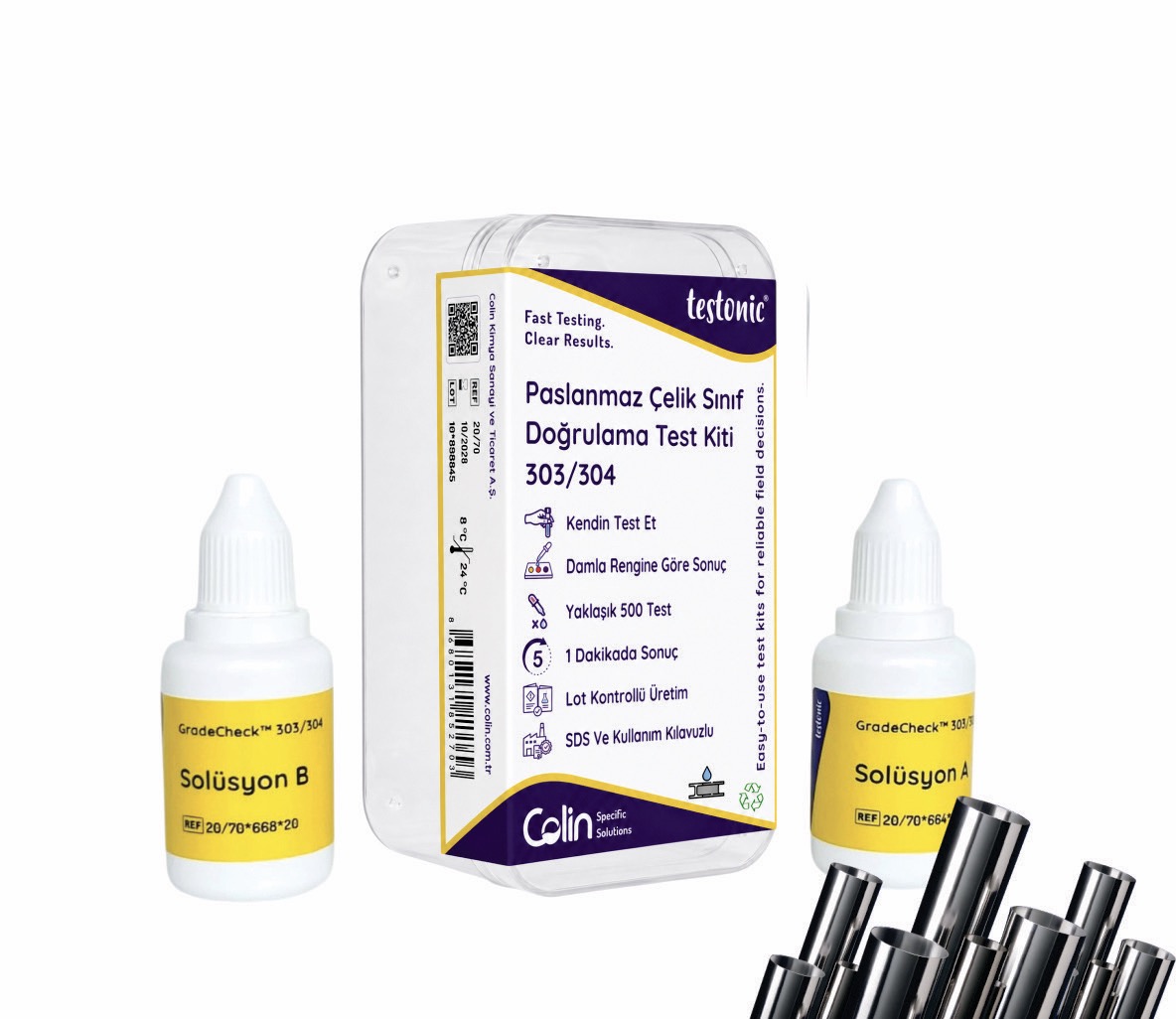
Testonic Metal Analysis Kits – Assuring Material Integrity in Seconds
When it comes to high-performance industries like textile finishing, cosmetics manufacturing, industrial detergent production, or disinfection chemistry, the materials used in your infrastructure matter as much as the chemistry itself. One of the most overlooked, yet critical variables? The grade of stainless steel used in your production equipment.
This is where Testonic Metal Analysis Kits come into play—fast, field-ready, and non-destructive solutions to determine the true identity and quality of your metal surfaces. Let's explore why not all steels are created equal, and why testing matters more than ever.
Not All Steels Are Created Equal
Stainless steel might look the same on the outside—but minor differences in alloy composition can drastically impact its corrosion resistance, mechanical strength, and chemical reactivity.
For example:
-
Type 304 stainless steel is the industry standard for food processing and chemical equipment.
-
Type 316 stainless steel contains added molybdenum for better corrosion resistance in aggressive environments, such as chlorine- or acid-rich processes.
-
Type 303, optimized for machinability, has a higher sulfur content, making it unsuitable for processes involving strong acids or chlorinated solvents.
Failing to identify and use the correct grade can lead to:
-
Unexpected corrosion or pitting
-
Product contamination
-
Reduced equipment lifespan
-
Non-compliance with regulatory standards
Why is Steel Grade Verification Important?
In industries that depend on chemical precision and hygiene, the correct metal grade ensures:
-
Safety: Preventing chemical leaching, corrosion, or mechanical failure.
-
Process Integrity: Avoiding unwanted catalytic reactions or contamination.
-
Regulatory Compliance: Particularly in GMP, ISO 9001, ISO 13485, and HACCP environments.
-
Cost Efficiency: Avoiding premature equipment failures, product recalls, or batch losses.
Case Applications – Where Steel Grade Matters
1. Textile Finishing:
In dyeing, washing, or finishing lines, the presence of reducing agents, bleaches, acids, or alkalis can corrode the wrong steel grade. 316 steel is typically preferred over 304 in aggressive environments due to its superior resistance.
2. Cosmetic Production:
Product pH ranges, emulsifiers, and preservatives can degrade suboptimal steel surfaces. Ensuring 304 or 316 compliance prevents cross-contamination and upholds cleanroom standards.
3. Detergents and Disinfectants:
Many cleaning formulations contain peroxides, hypochlorite, or acids. Inadequate steel grades may rust or leach ions, affecting both product stability and safety.
Introducing Testonic Metal Analysis Kits
Our Testonic Metal Analysis Kits are developed for on-the-spot verification, allowing manufacturers and quality inspectors to instantly confirm metal identity without relying on off-site laboratory analysis.
✓ AlloyCheck™ 304/316 Kit
A portable, spot test system that distinguishes between 304 and 316 grades in seconds using electrochemical detection.
✓ GradeCheck™ 303/304 Kit
Tailored for environments where machinable stainless steael (303) may be confused with standard 304, risking corrosion and structural failure.
Why Choose Testonic Kits?
-
Portable and practical – No need for lab access.
-
Non-destructive testing – No damage to the surface or structure.
-
No technical expertise required – Clear, colorimetric reactions for instant interpretation.
-
Increased confidence in procurement and maintenance – Especially when dealing with scrap, third-party installations, or imported equipment.
Choosing the Right Steel for the Job
|
Application |
Recommended Steel Grade |
Reason |
|---|---|---|
|
Textile Finishing (Acidic/Alkaline) |
316 |
High corrosion resistance |
|
Cosmetic Mixing Vessels |
304 or 316 |
Inertness and hygiene |
|
Detergent Production Reactors |
316 |
Resists chloride and bleach attack |
|
Powder Filling Equipment |
304 |
General corrosion resistance |
|
Machining Parts (non-contact) |
303 |
Easier machining, not for chemical contact |
Conclusion: Don’t Let Metal Guesswork Compromise Your Process
Using the wrong metal alloy in a critical process is like using the wrong reagent in your formulation—it can be disastrous. The Testonic Metal Analysis Kit Series is designed to give your team instant clarity in the field, in the factory, or in storage.
Because in chemical production, even the invisible differences in metal can lead to visible consequences.
Explore the Testonic Advantage.
Trust your metals. Trust your process.