Textile dyeing and finishing processes are built on a delicate balance. As an experienced dyehouse manager or engineer, you know all too well how costly and time-consuming issues like shade variation between batches, unexpected stains, low whiteness, or poor fastness can be. Customer complaints, returns, and reprocessing not only erode your profitability but also damage your reputation.
So, what is the usual source of these problems? Most of the time, the answer lies with "invisible enemies" we can't see: the quality of your water and the purity of the chemicals you use.
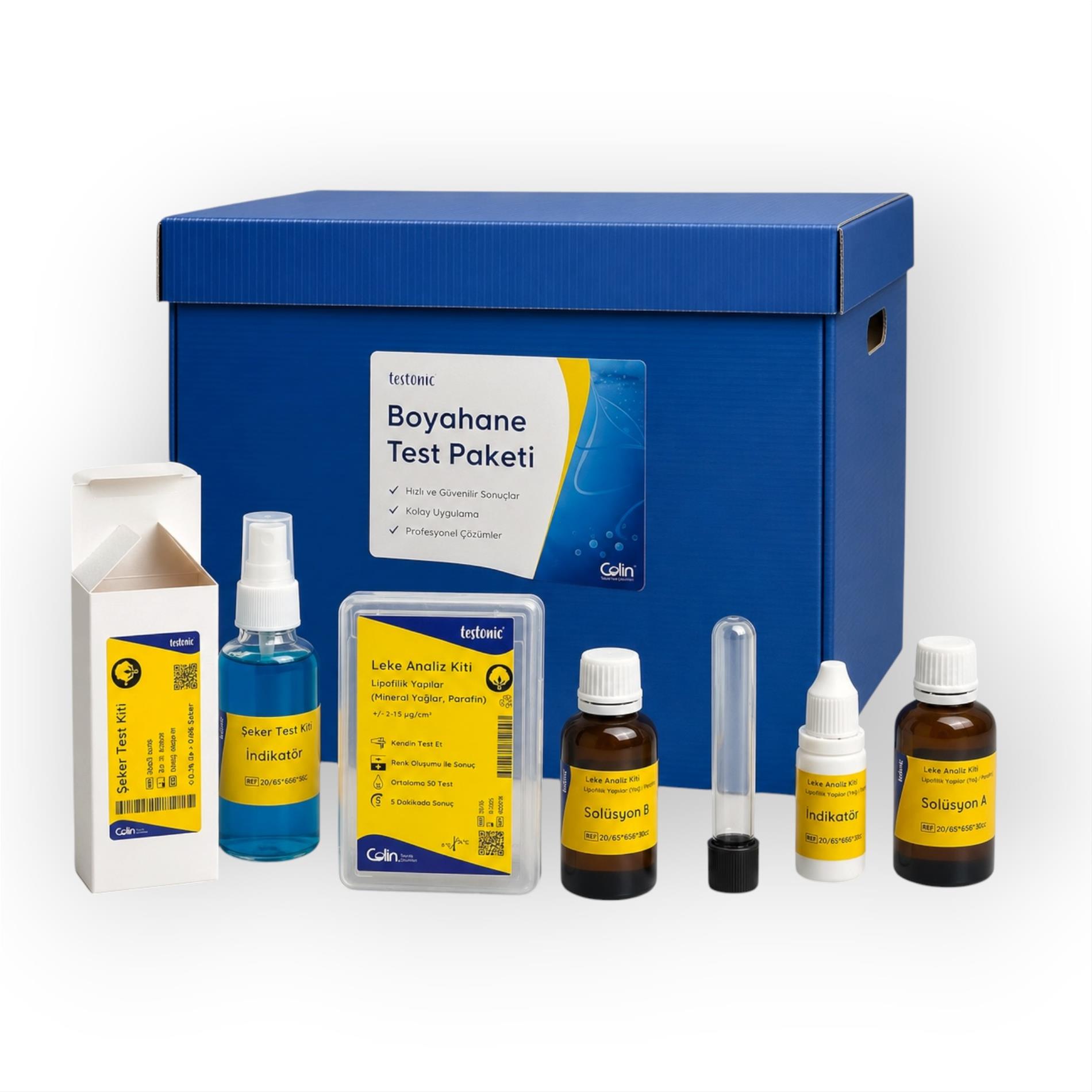
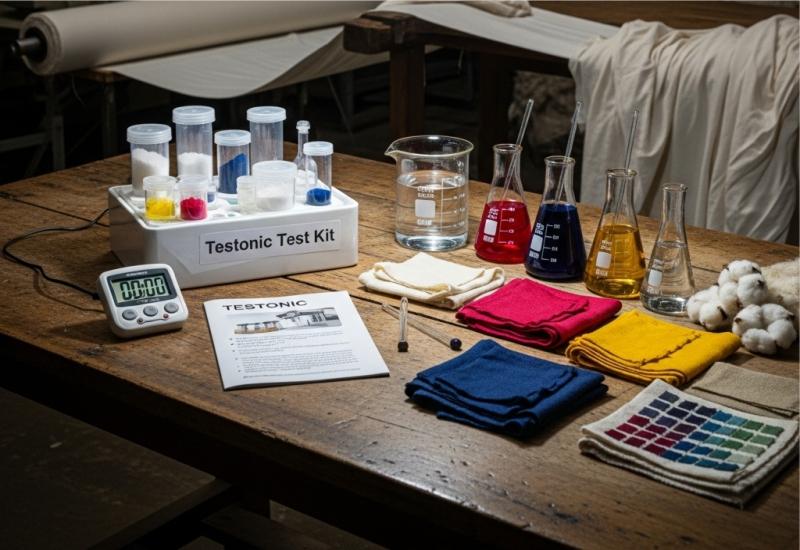
Stop wasting time and money on guesswork. There is a practical way to take control of every step of your process: the Testonic Dyebath Test Kit.
The Most Common Problems and the Tests That Offer Instant Solutions
Let's examine the common nightmares in dyehouses and how Testonic test kits can identify these problems at their source.
1. Problem: Color Deviations and Shade Inconsistency ("Why Did This Color Turn Out Different?")
Achieving the same color in every batch is the foundation of standardization. However, invisible parameters in your water can sabotage even the most perfect recipe.
-
Root Cause: A pH imbalance in the dyebath, along with high levels of Alkalinity and Bicarbonate in the water, directly affects the dyestuff's ability to fix to the fiber. High alkalinity increases the amount of acid you need for pH adjustment and causes colors to consistently come out lighter or darker.
-
Testonic Solution:
-
pH Indicator Solution: Secure the first step of color consistency by measuring the bath's pH value in seconds.
-
Alkalinity and Bicarbonate Test Kits: Understand your water's buffering capacity. Find the answer to "Why are we using so much acid?" and optimize your chemical consumption.
-
2. Problem: Staining, Spotting, and A Soiled Appearance
Brownish, yellowish, or soapy stains on the fabric surface can ruin an entire batch instantly. The culprits are often metal ions dissolved in the water.
-
Root Cause: Iron (Fe²⁺/Fe³⁺) ions leave rust-like brown spots on the fabric. Copper (Cu²⁺) leads to unexpected shifts in color. High Hardness (Ca²⁺/Mg²⁺) causes dyestuffs to precipitate and results in soap stains.
-
Testonic Solution:
-
Iron Test Kit: Instantly identify the cause of those frustrating brown spots on your fabric.
-
Copper Test Kit: Eliminate the threat of copper, which reduces whiteness and distorts colors, especially in peroxide bleaching.
-
Total Hardness Test Kit: Measure your water's hardness in French degrees (°fH) to prevent the risk of saponification and uneven dyeing.
-
3. Problem: Insufficient Whiteness and Yellowing Issues
Failure to achieve the desired degree of whiteness, especially in the bleaching process, or yellowing of the fabric during storage are serious quality issues.
-
Root Cause: In peroxide bleaching, metals like iron and copper decompose hydrogen peroxide (H₂O₂), reducing its effectiveness. Free (Active) Chlorine left on the fabric due to inadequate rinsing can lead to yellowing and even loss of strength over time.
-
Testonic Solution:
-
Hydrogen Peroxide (%) Test Kit: Verify the strength of your recipe by measuring the active peroxide concentration in your bleaching bath.
-
Free Chlorine Test Kit: Ensure no chlorine remains in your rinse water. Protect your fabric against the risk of yellowing and tearing.
-
The Problem Isn't Just Water: How Reliable Are Your Chemical Raw Materials?
Are you sure that your chemicals, one of your biggest cost items, actually contain what's stated on the label? Diluted or adulterated products can unknowingly sabotage your entire process.
-
When You Think You're Buying Acetic Acid...
-
Problem: If you're using much more acid than expected for pH adjustment, or if the pH won't reach the target level, your acid may be diluted or mixed with Hydrochloric (HCl) or Sulfuric Acid (H₂SO₄) to cut costs. This not only makes process control difficult but also causes corrosion in your machinery.
-
Testonic Solution: Measure the true concentration with the Acetic Acid % Test Kit. Instantly detect unwanted and harmful adulterants with the HCl and H₂SO₄ Screening Kits.
-
-
Are Your Ion Sequestrants Really Working?
-
Problem: If staining and whiteness issues persist, the Iron, Copper, and Calcium Binding Capacity of your sequestrants (complexing agents) may be insufficient. Products with low active ingredients leave you unprotected against metals.
-
Testonic Solution: Verify the performance of the product you receive from your supplier with the Iron, Copper, and Calcium Binding Capacity Test Kits. Protect your money and your process.
-
-
The "Invisible" Residues Left After Rinsing
-
Problem: Residual anionic, cationic, or non-ionic surfactant (detergent) left on the fabric after washing can cause uneven dye uptake, failure in finishing processes, and poor fastness properties.
-
Testonic Solution: Check the effectiveness of your rinsing in seconds with the Anionic, Cationic, and Non-ionic Surfactant Detection Kits. Ensure a clean start for a perfect next step.
-
Why Choose the Testonic Dyebath Test Kit?
Because you no longer have to fix problems after they occur. With Testonic, you can:
-
BE PROACTIVE: Identify the source of problems before they arise.
-
REDUCE COSTS: Minimize chemical, water, and energy consumption. Eliminate the costs of faulty production and reprocessing.
-
STANDARDIZE QUALITY: Increase customer satisfaction by ensuring the same quality and color consistency in every batch.
-
AUDIT YOUR SUPPLIERS: Get what you pay for by verifying the quality of the chemicals you purchase.
The Testonic Dyebath Test Kit is the fastest, most practical, and most economical way to set up a laboratory in your facility. Take control of your process; don't leave your quality to chance.
Contact us today for detailed information and solutions tailored to your business!
```