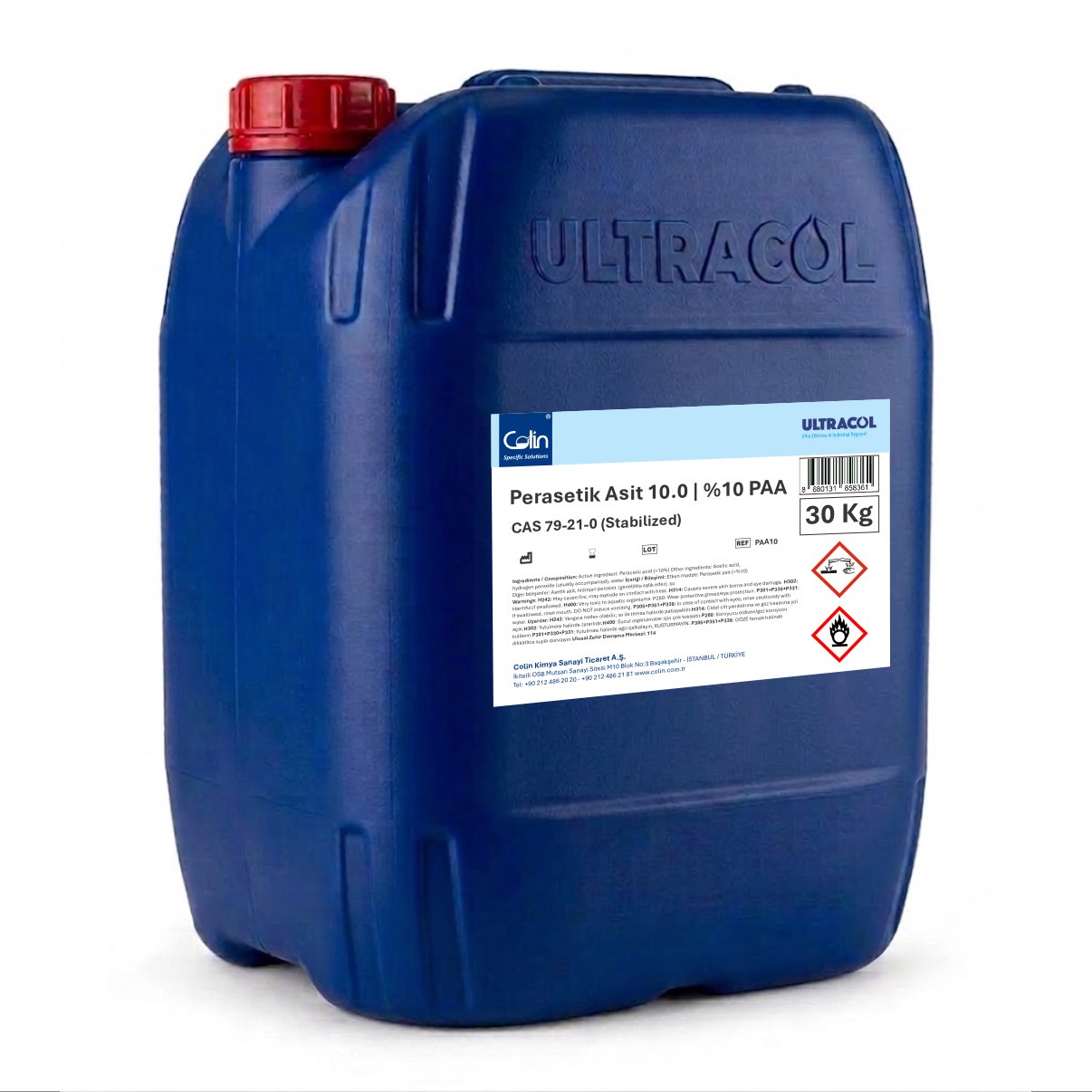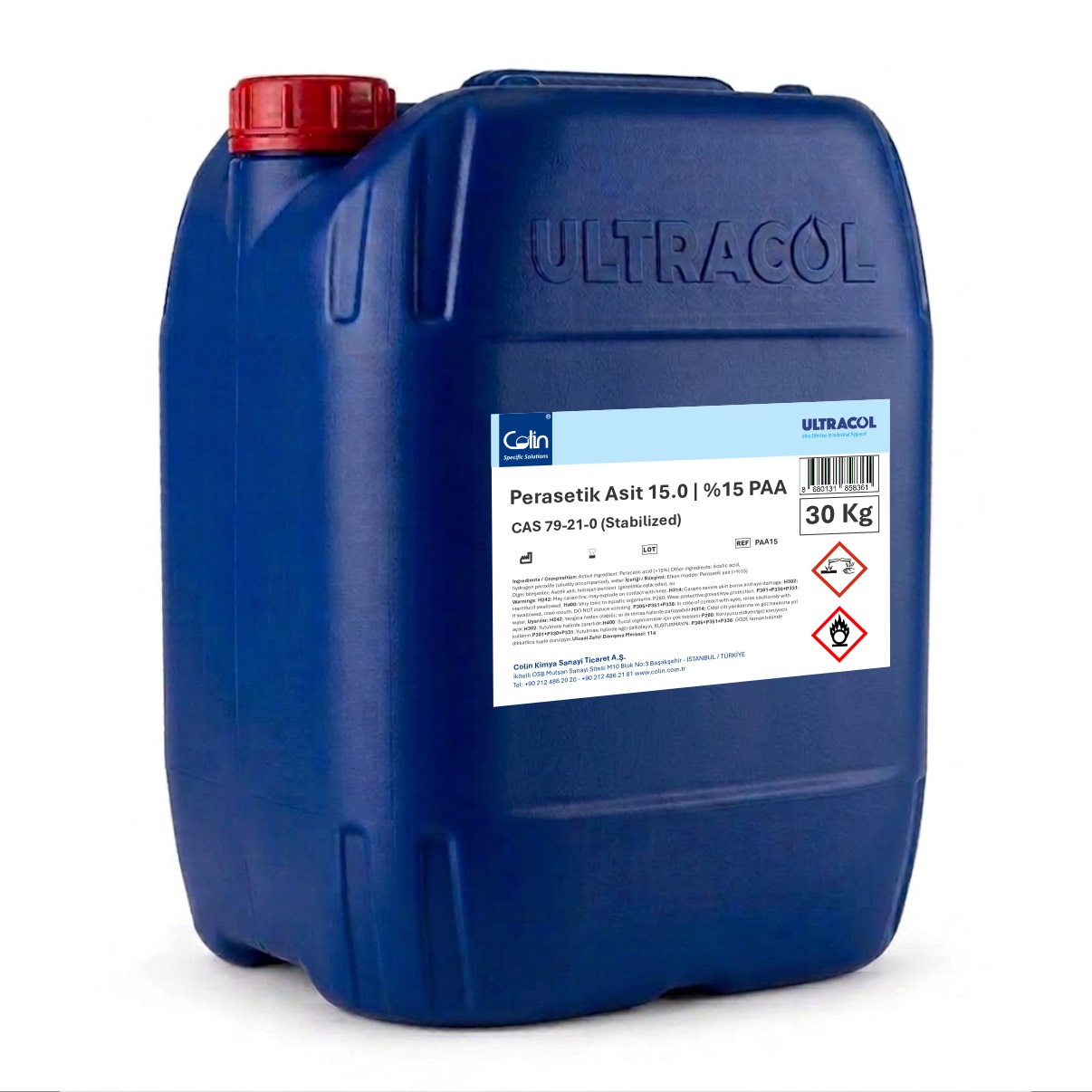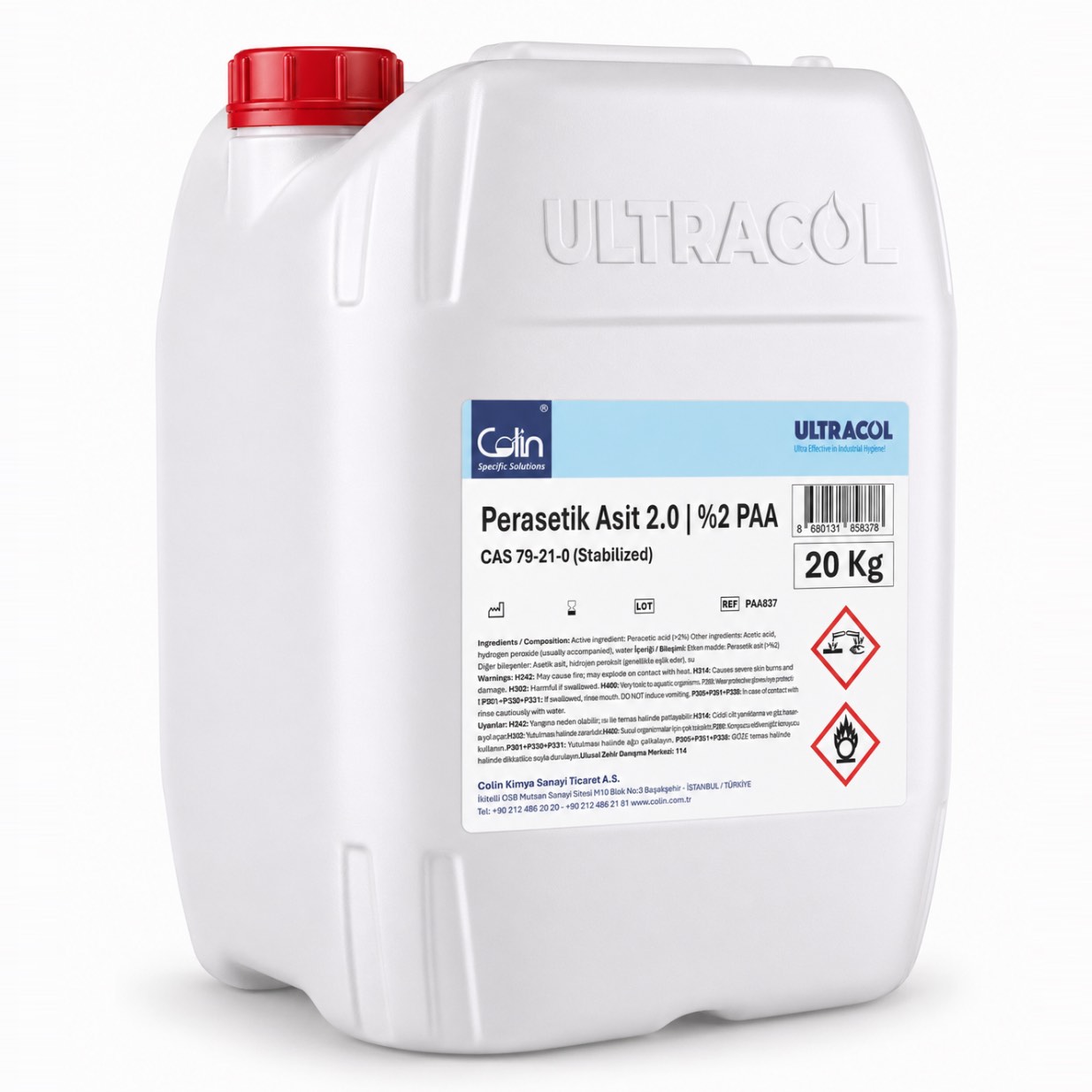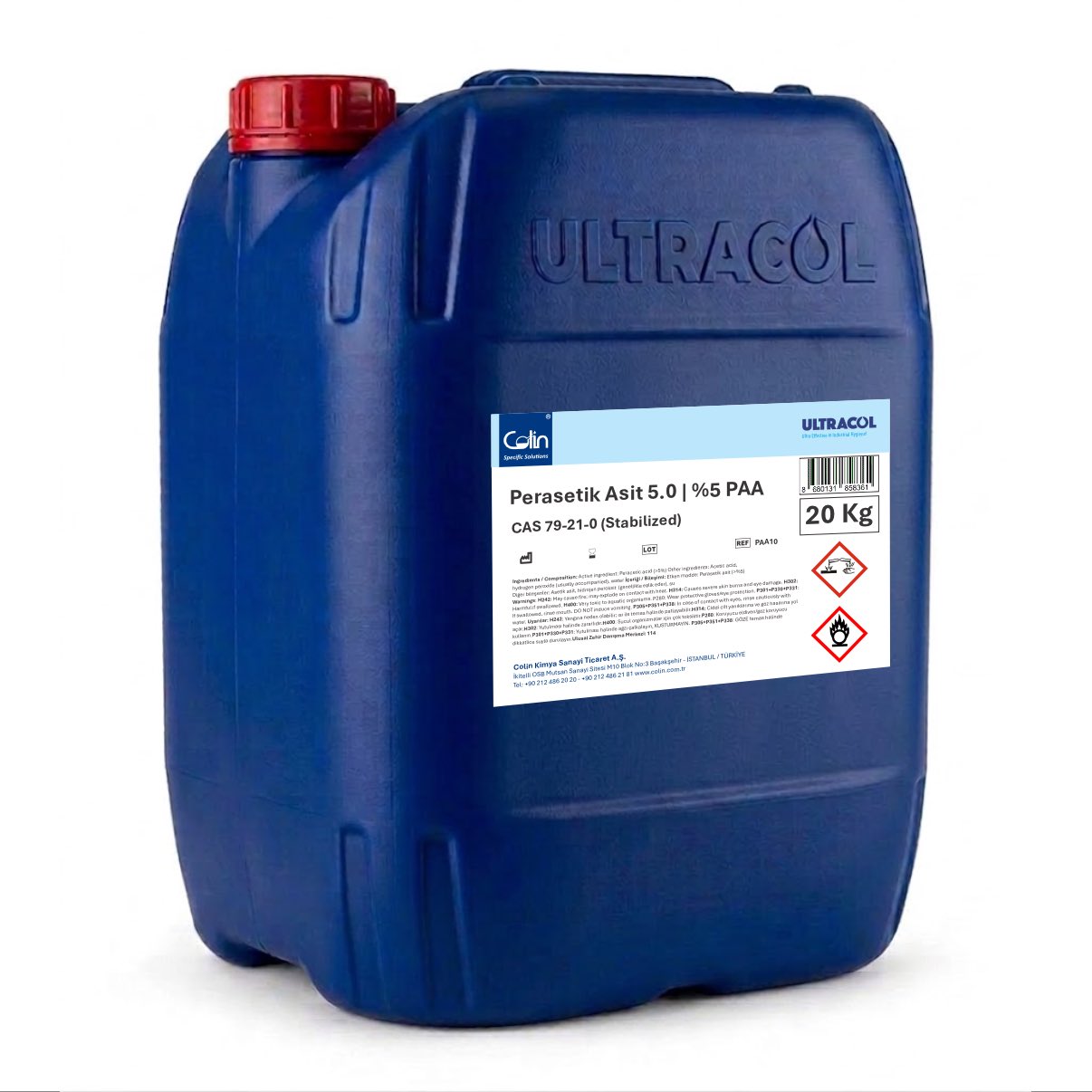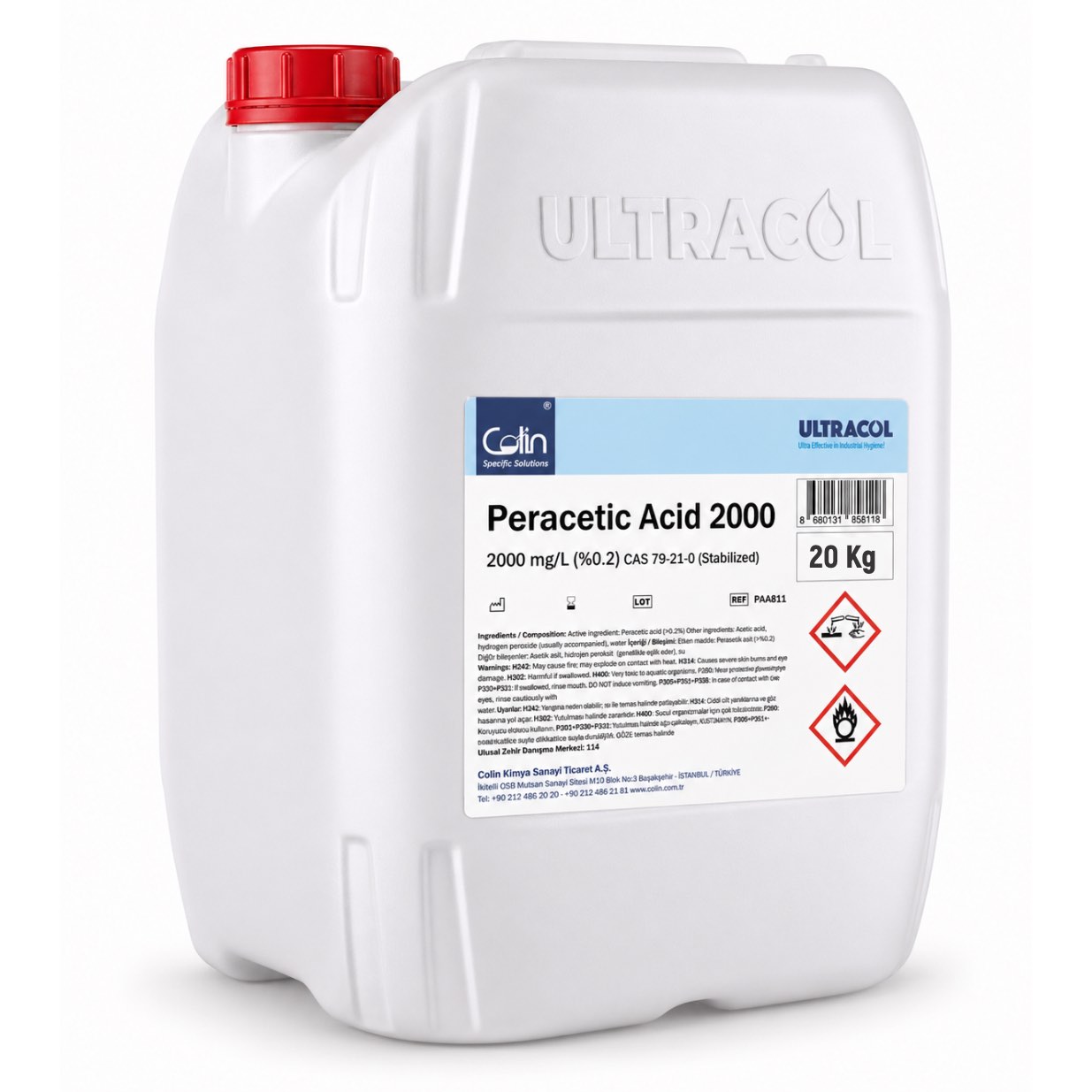

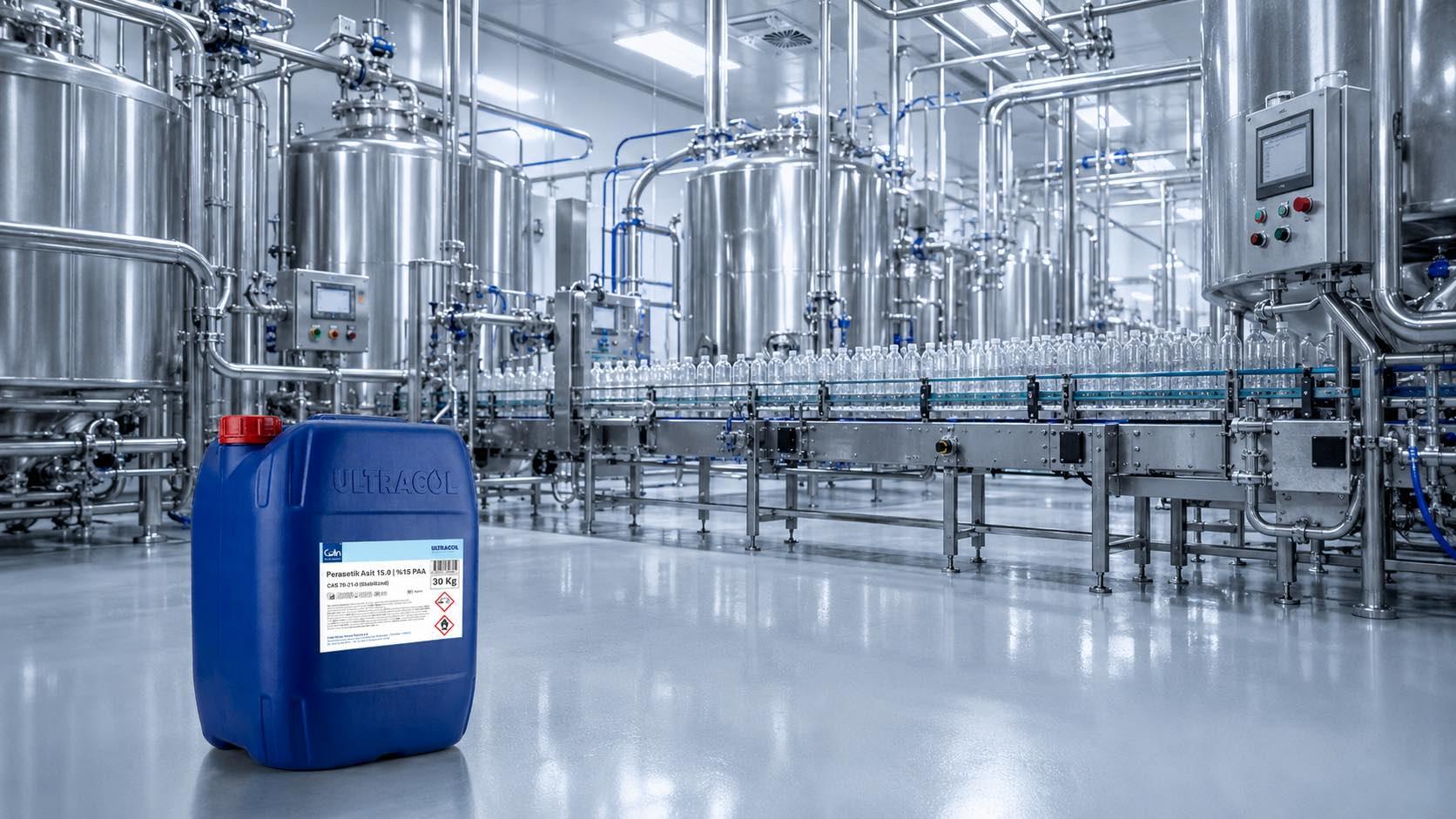
The Real Question in Food Hygiene: Not the Strongest Chemical, but the Most Manageable System
In food production facilities, disinfection decisions often begin with the wrong question: “Which disinfectant is stronger?” In a real production environment, the more accurate question is: Which disinfectant can be managed most effectively according to this facility’s machinery, product group, contact surfaces, CIP/SIP system, rinsing procedure, and residue control requirements?
A chemical may be highly effective under laboratory conditions; however, in a production facility, antimicrobial strength alone is not enough. The disinfectant must be prepared at the correct concentration, reach the target surface, maintain sufficient contact time, tolerate a reasonable level of organic load, avoid damaging equipment, be safe for operators to apply, and allow residue control when required.
For this reason, successful disinfection in food hygiene is not merely a product selection. It is a process safety decision.
Peracetic acid, commonly known as PAA, stands out precisely at this point. Due to its strong oxidative effect, broad antimicrobial spectrum, low residue profile, and compatibility with CIP/SIP systems, PAA is one of the widely used disinfectants for process hygiene in food and beverage facilities.
Why Is Peracetic Acid Considered One of the Gold Standard Approaches in Process Hygiene?
The value of PAA in food production facilities is not based only on its strength as a disinfectant. What makes it important is its ability to deliver strong antimicrobial activity in a way that is manageable under process conditions.
In food production, disinfectant selection should be evaluated together with the following parameters:
-
Antimicrobial efficacy
-
Contact time
-
Application concentration
-
Temperature compatibility
-
Organic load tolerance
-
CIP/SIP compatibility
-
Storage stability
-
Transportation convenience
-
Residue management
-
Operator safety
-
Measurability and verification
PAA offers a balanced profile across many of these parameters. Ozone is a very powerful oxidizing agent, but it cannot be stored and must be generated at the point of use. Chlorine dioxide can perform strongly in certain applications, but it often requires on-site generation, activation, or dedicated dosing equipment. Chlorine-based products may be economical and widely used, but they may also present limitations related to organic load, corrosion, odor, and chlorinated by-product formation.
PAA, on the other hand, can be transported, stored, dosed, monitored, and integrated into process systems at controlled concentrations. Therefore, the most accurate way to describe PAA is:
Peracetic acid is one of the oxidative disinfectants considered a gold standard in food and beverage process hygiene, CIP/SIP disinfection, and low-residue food contact surface applications.
This statement is important because it does not position PAA as a universal chemical that replaces everything else. Instead, it defines PAA as a technically strong and operationally applicable solution for process hygiene.
The Main Strength of PAA in Food Facilities: CIP/SIP and Food Contact Surfaces
The strongest application area of PAA is not general floor cleaning or simple surface rinsing. Its real value becomes visible in closed systems, production lines, tanks, internal pipe surfaces, filling equipment, and food contact surfaces.
The challenge in these areas is that hygiene risks are not limited to visible surfaces. Valve areas, bends, connection points, dead legs, filling nozzles, pump interiors, tank walls, and long pipelines are often difficult to access mechanically. Therefore, the disinfectant used in these areas must not only be strong; it must also be suitable for circulation, low foaming, accurately dosed, and easy to monitor.
For this reason, PAA should not be evaluated merely as a “disinfectant.” It should be considered a food process hygiene chemical.
Selling a Product Is Not Enough: PAA Application Must Be Planned According to the Facility’s Process
One of the most common mistakes in food production facilities is recommending a disinfectant with a fixed dosage for every facility. In reality, every plant has its own hygiene risks.
The CIP requirement of a dairy plant is not the same as the disinfection requirement of a flour production line. A fruit and vegetable washing line cannot be managed with the same hygiene approach as a filling machine. In meat processing facilities, protein and fat load are critical, whereas in beverage lines, internal pipeline biofilm and filling hygiene may be more important. In flour and dry food facilities, water use, drying requirements, and equipment accessibility must also be evaluated separately.
Therefore, the correct approach in PAA application is:
First understand the process, then recommend the chemical.
At Colin Kimya, we do not treat PAA applications merely as product supply. We evaluate the customer’s production process, machinery, contact surfaces, hygiene risks, and existing cleaning practices, and then prepare a site-specific usage guideline.
With this approach, the customer does not only learn “how many liters of product to use.” They also understand where, when, at what concentration, for how long, with which rinsing procedure, and with which residue control method PAA should be used in their own facility.
What Do We Evaluate in a Site-Specific PAA Usage Guideline?
PAA application plans should not be identical for every food facility. When preparing a site-specific usage guideline, the following points are technically evaluated.
1. Production Line and Machinery Structure
First, the line where the product will be used is examined. It is determined whether the application area is an open surface, closed pipeline, tank system, filling line, washing basin, conveyor, or CIP/SIP system.
This distinction is essential because open surface application and closed-line disinfection cannot be performed in the same way. The appropriate method — spraying, circulation, immersion, fogging, manual application, or automatic dosing — must be selected according to the process structure.
2. Contact Surface and Equipment Material
Food production facilities may include stainless steel, plastic, gaskets, hoses, pumps, valves, chrome surfaces, aluminum parts, or specially coated equipment. PAA is a strong oxidative disinfectant; therefore, the concentration and contact time must be compatible with the equipment materials.
When applied correctly, PAA provides hygienic control. When applied incorrectly, it may create unnecessary corrosion or surface wear risks. For this reason, material compatibility is also evaluated in the site-specific guideline.
3. Organic Load and Pre-Cleaning Requirement
PAA is a disinfectant; it is not a heavy-duty cleaner or detergent. Therefore, in lines containing protein, fat, flour dust, starch, sugar, milk stone, biofilm, or product residues, proper cleaning must be performed before disinfection.
The most successful application generally follows this logic:
-
Physical pre-cleaning
-
Suitable detergent, alkaline, or acidic cleaning
-
Rinsing
-
Disinfection with PAA
-
Final rinsing or residue control when required
With correct pre-cleaning, the effectiveness of PAA becomes more reliable.
4. PAA Concentration to Be Used
PAA products may contain different active concentrations. For example, low-concentration ready-to-use or near-ready-to-use products, medium-concentration products, and high-concentration industrial solutions all require different dosing approaches.
Therefore, stating only “use this amount of product” is not sufficient. The correct recommendation should be made based on the target active PAA level in ppm.
Depending on the application, the target active PAA level may differ for:
-
Low-risk surface disinfection
-
Final CIP sanitation
-
Process water hygiene
-
Food contact surfaces
-
High microbial risk areas
-
Pilot trial applications
For this reason, concentration should be calculated according to the process, not guessed as a fixed product dose.
5. Contact Time
Contact time is one of the most critical parameters in disinfection. Even if PAA is prepared at the correct ppm level, the expected hygiene performance may not be achieved if the surface is not exposed for a sufficient period.
Therefore, the site-specific guideline should clarify the following questions:
-
How many minutes should PAA remain in contact with the surface?
-
How long should it circulate in a closed line?
-
In spray applications, how long should the surface remain wet?
-
In immersion applications, how long should the equipment or product be kept in contact?
-
Is rinsing required after contact?
-
How should the transition back to production be planned?
General usage instructions given without answering these questions remain incomplete.
6. Temperature and Process Conditions
One of the important advantages of PAA is that it can be effective at low and moderate temperatures. This is particularly important for dairy, beverage, cold process, filling line, and low-temperature food production applications.
However, as temperature increases, PAA decomposition rate, gas release, and active loss may also change. Therefore, the application temperature range must be controlled.
In the site-specific usage guideline, the application temperature should be clearly indicated. This prevents operators from using the product at unnecessarily high temperatures, which could compromise both effectiveness and safety.
7. Rinsing and Residue Control
The decomposition products of PAA are generally acetic acid, oxygen, and water. This gives PAA an important advantage in terms of low residue profile.
However, this should not be generalized as “rinsing is never required.” The need for rinsing should be evaluated according to:
-
Active ppm used
-
Contact time
-
Surface type
-
Direct food contact
-
Regulatory requirements
-
Facility HACCP plan
-
Product group to be produced
-
Residue control capability
Therefore, the site-specific guideline should clearly define rinsing requirements and residue control methods. When necessary, PAA test strips or colorimetric residue control kits may be recommended to verify the remaining active level.
Why Do We Prepare Site-Specific Guidelines Instead of General Usage Instructions?
Because the same chemical can produce different results in different food production facilities.
In a beverage facility, the main role of PAA may be pipeline and filling hygiene. In a flour facility, hard-to-reach conveying lines, sieves, and roller mill areas may be critical. In a meat processing facility, protein and fat load make pre-cleaning decisive. In a fruit and vegetable facility, process water hygiene, product surface sanitation, and final rinsing strategy become more important.
A site-specific guideline provides the following benefits:
-
The product is used at the correct concentration.
-
Unnecessarily high dosage is avoided.
-
Chemical cost is controlled.
-
Equipment compatibility is protected.
-
Operator mistakes are reduced.
-
Residue control becomes clear.
-
An explainable hygiene protocol is created for audits.
-
Application becomes compatible with HACCP and quality assurance records.
-
A repeatable hygiene standard is achieved across every shift.
This approach transforms PAA from a disinfectant that is simply purchased into a part of the facility’s hygiene management system.
The Real Difference Between PAA and Competing Chemicals
In order to describe PAA’s strength correctly, it is not necessary to dismiss other disinfection systems. Each chemical has an appropriate field of use.
Chlorine-based products may be economical and practical in some surface and washing applications. Chlorine dioxide can be a strong option for biofilm and water line applications. Ozone may be effective in systems requiring rapid oxidation. Hydrogen peroxide has an important role in aseptic packaging and certain sterilization applications.
However, from the perspective of process hygiene in food production facilities, the key difference of PAA is:
PAA offers strong oxidative activity in a form that can be transported, stored, dosed, measured, and integrated into CIP/SIP systems.
For this reason, instead of calling PAA “the strongest chemical,” it is more accurate to describe it as one of the most balanced solutions for process hygiene.
This distinction is very important for technical decision-makers in food facilities. A plant does not only need a product that kills microorganisms; it needs a hygiene system that can be applied without disrupting production, documented, controlled, and repeated reliably in every shift.
Why Is Pilot Application Important in PAA Use?
Since each facility has different soil load, microbial risk, machinery structure, and production habits, the most accurate approach in PAA applications is a controlled pilot trial.
A pilot application typically evaluates:
-
Selected target surface or line
-
Initial microbial load
-
Existing cleaning procedure
-
PAA ppm level
-
Contact time
-
Temperature
-
Rinsing requirement
-
Residue control after application
-
Microbiological verification
-
Operator application practicality
-
Observed effect on equipment surfaces
In this way, the product recommendation is not based on assumption, but on the real conditions of the facility.
At Colin Kimya, we recommend a pilot application and process evaluation approach wherever possible in PAA applications. Correct application is achieved not only by choosing the product, but by defining how the product will be managed inside the facility.
The Colin Kimya Approach: Product + Process Knowledge + Usage Guideline
PAA products are powerful hygiene tools for food production facilities when used correctly. However, the real value of PAA emerges when it is used together with technical knowledge.
At Colin Kimya, our goal is not merely to ship a product to the customer. Our goal is to understand the process in which the product will be used, identify critical risk points, and create an applicable usage method.
Within this scope, we provide support in the following areas:
-
Evaluation of production line and machinery structure
-
Selection of suitable PAA concentration
-
Target ppm calculation
-
Identification of application points
-
Contact time recommendation
-
Evaluation of rinsing requirement
-
Determination of residue control approach
-
Pilot application planning
-
Simple operator instructions
-
Quality control and hygiene verification recommendations
With this approach, PAA becomes not a randomly used disinfectant, but a measurable and manageable process hygiene solution.
Conclusion: In Food Hygiene, the Gold Standard Is Not Only the Product, but the Correct Application System
Peracetic acid stands out as a strong oxidative disinfection solution in food and beverage process hygiene, CIP/SIP disinfection, and food contact surface applications. However, the real value of PAA lies not only in its antimicrobial strength, but in the fact that it can be transported, stored, dosed, controlled, and integrated into process systems.
In food hygiene, the best disinfectant is not necessarily the strongest one in theory. It is the one that can be applied safely, measurably, and repeatedly under the real conditions of the facility.
Therefore, the correct approach in PAA applications is:
Before selecting the product, the process must be understood; the application concentration, contact time, application point, and residue control method must be determined specifically for the facility.
At Colin Kimya, we offer our PAA solutions with this understanding. In food and beverage production facilities, we evaluate PAA not only as a disinfectant, but as a technical solution that makes process hygiene manageable.