


Peracetic Acid Information Center
Review peracetic acid (PAA) chemical identity, molecular structure, product concentrations, application areas, dilution calculations, active PAA verification, technical documents and application-specific evaluation processes in one central knowledge hub.
PAA Information Center Contents
Quickly access peracetic acid product selection, application areas, dilution calculation, technical documents, academy articles and application-specific technical support.
Share your application area, target ppm, system volume and process conditions; create a technical evaluation request.
What is PAA?
Peracetic acid (PAA) is a strong oxidative chemical compound belonging to the organic peroxyacid class, containing a peroxy functional group attached to an acetyl group. Its chemical formula is represented as CH₃COOOH or C₂H₄O₃. Although PAA is commonly present in equilibrium formulations in practical products, it should not be considered merely as a “mixture of acetic acid and hydrogen peroxide”; it is a distinct peroxyacid molecule with its own molecular structure, CAS number and chemical identity.
Commercial peracetic acid products are generally prepared as balanced formulations consisting of peracetic acid, hydrogen peroxide, acetic acid, water and stabilizers. This equilibrium system directly affects the active PAA concentration, stability, storage behavior and application performance. Therefore, product selection should not be based solely on the percentage of PAA; application area, target ppm, contact time, organic load, material compatibility and active PAA verification method should also be evaluated together.
Chemical Identity
| Common name | Peracetic Acid / Peroxyacetic Acid |
|---|---|
| IUPAC name | Ethaneperoxoic acid |
| Molecular formula | C2H4O3 |
| Structural formula | CH3COOOH |
| SMILES | CC(=O)OO |
| CAS No | 79-21-0 |
| EC / EINECS No | 201-186-8 |
| Molecular weight | 76.05 g/mol |
| Chemical class | Organic peroxyacid |
| Mode of action | Oxidative action / active oxygen-based reaction |
Molecular Structure Area
The peroxide bond is a key structural feature behind the oxidative character of PAA.
Technical Approach
Correct product selection in PAA applications should be evaluated according to process type, target active PAA level, organic load, contact time, surface or system structure and the need for test kit verification.
Create Technical RequestPAA Product Family
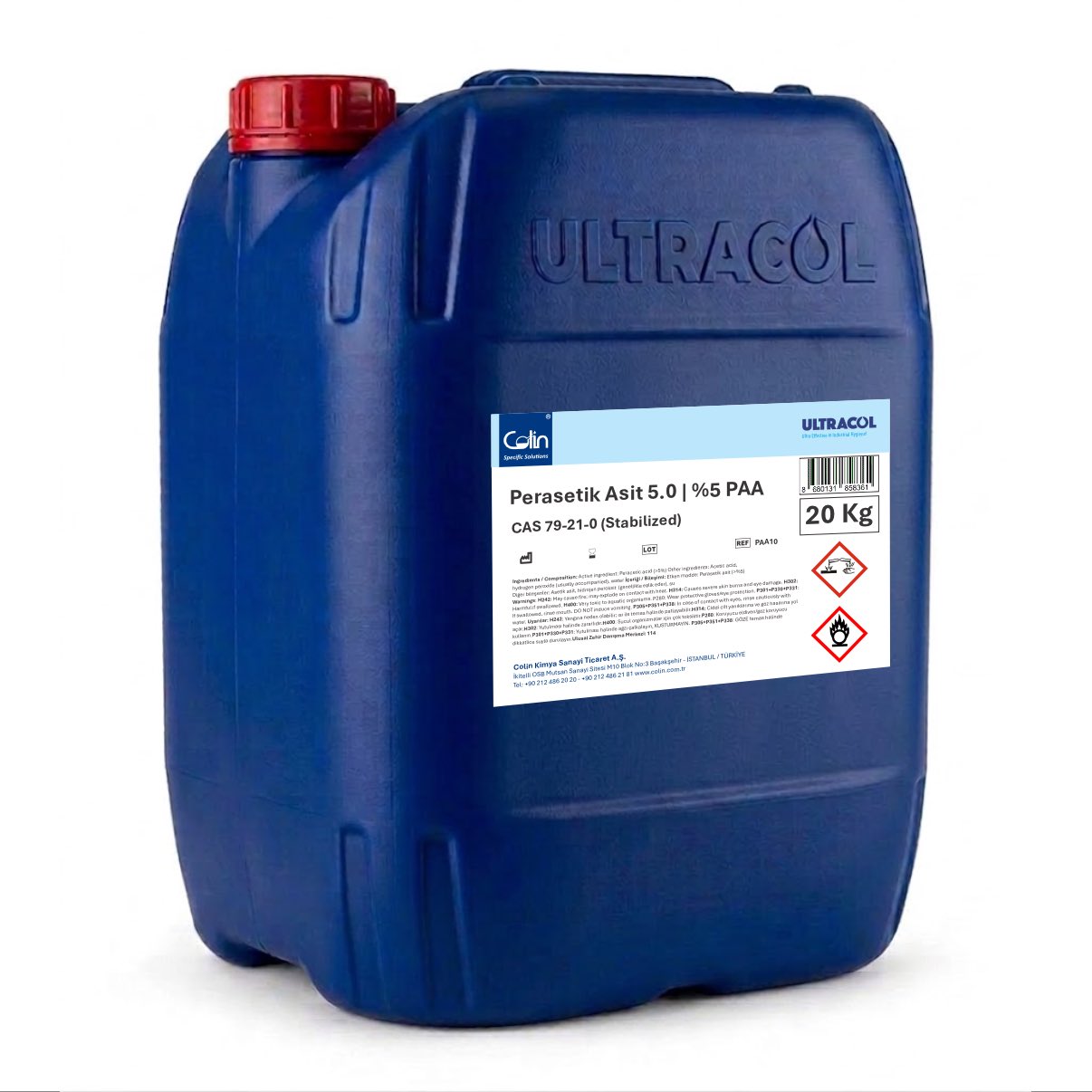
Peracetic Acid 5.0 | 5% PAA
5% PAA General Industrial HygienePeracetic Acid 5% is a powerful, non-foaming disinfectant containing more than 5% peracetic acid, developed for use in...
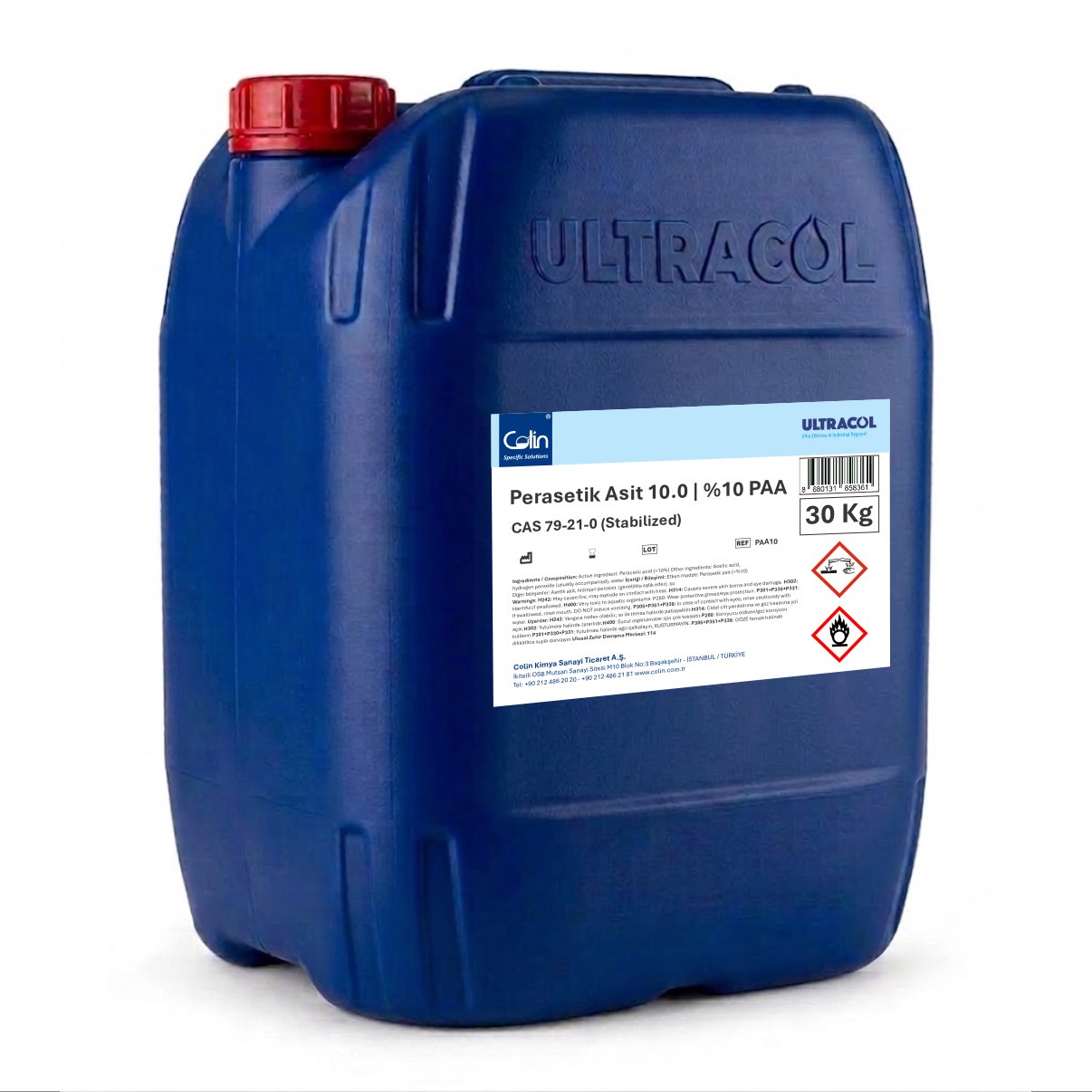
Peracetic Acid 10% | %10 PAA
10% PAA CIP / SIPPeracetic Acid %10 is a non-foaming and powerful disinfectant containing >10% peracetic acid, developed for the food, ...
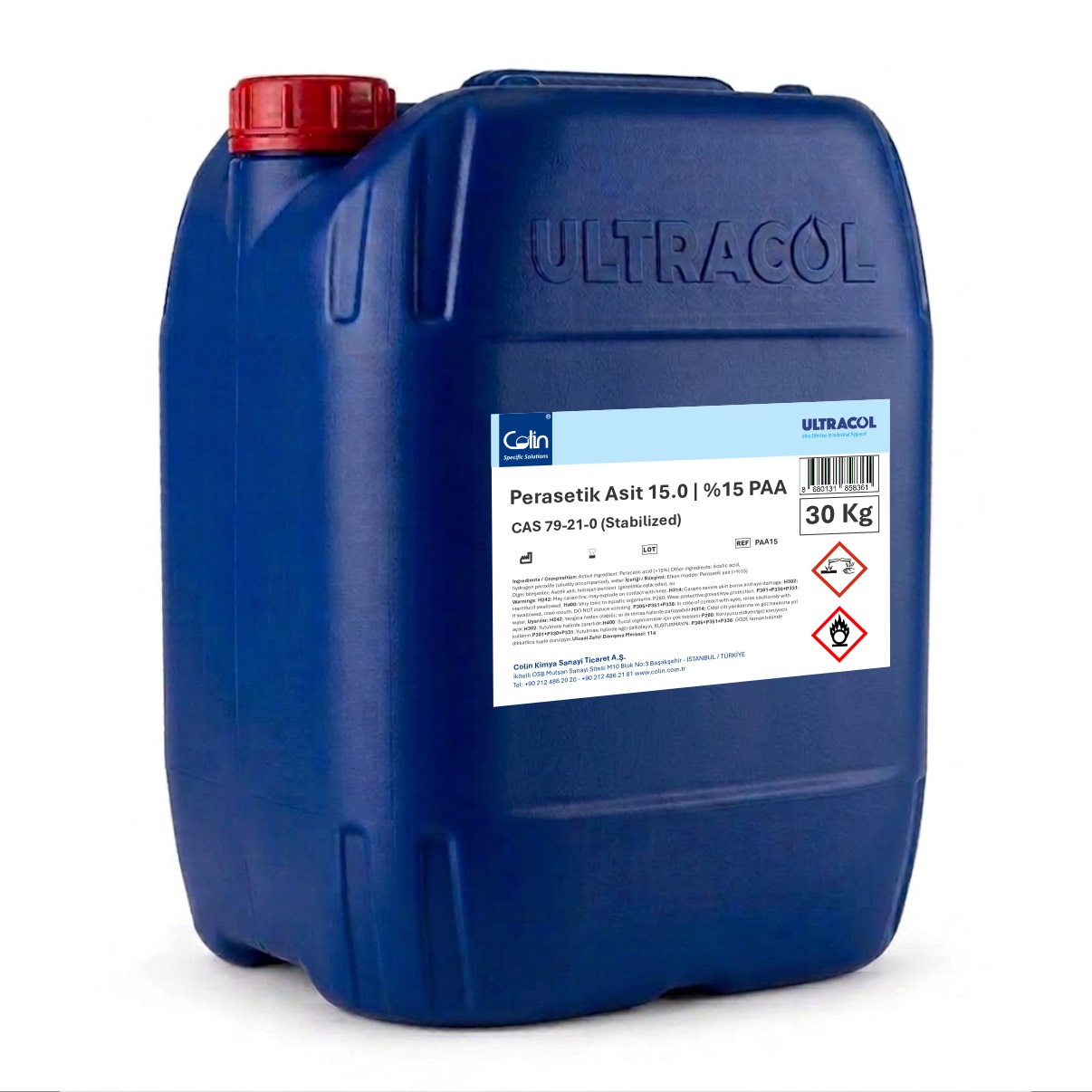
Peracetic Acid 15.0 | 15% PAA
15% PAA Concentrated ProfessionalPeracetic Acid %15 is a non-foaming and powerful disinfectant containing >15% peracetic acid, developed for the food, ...
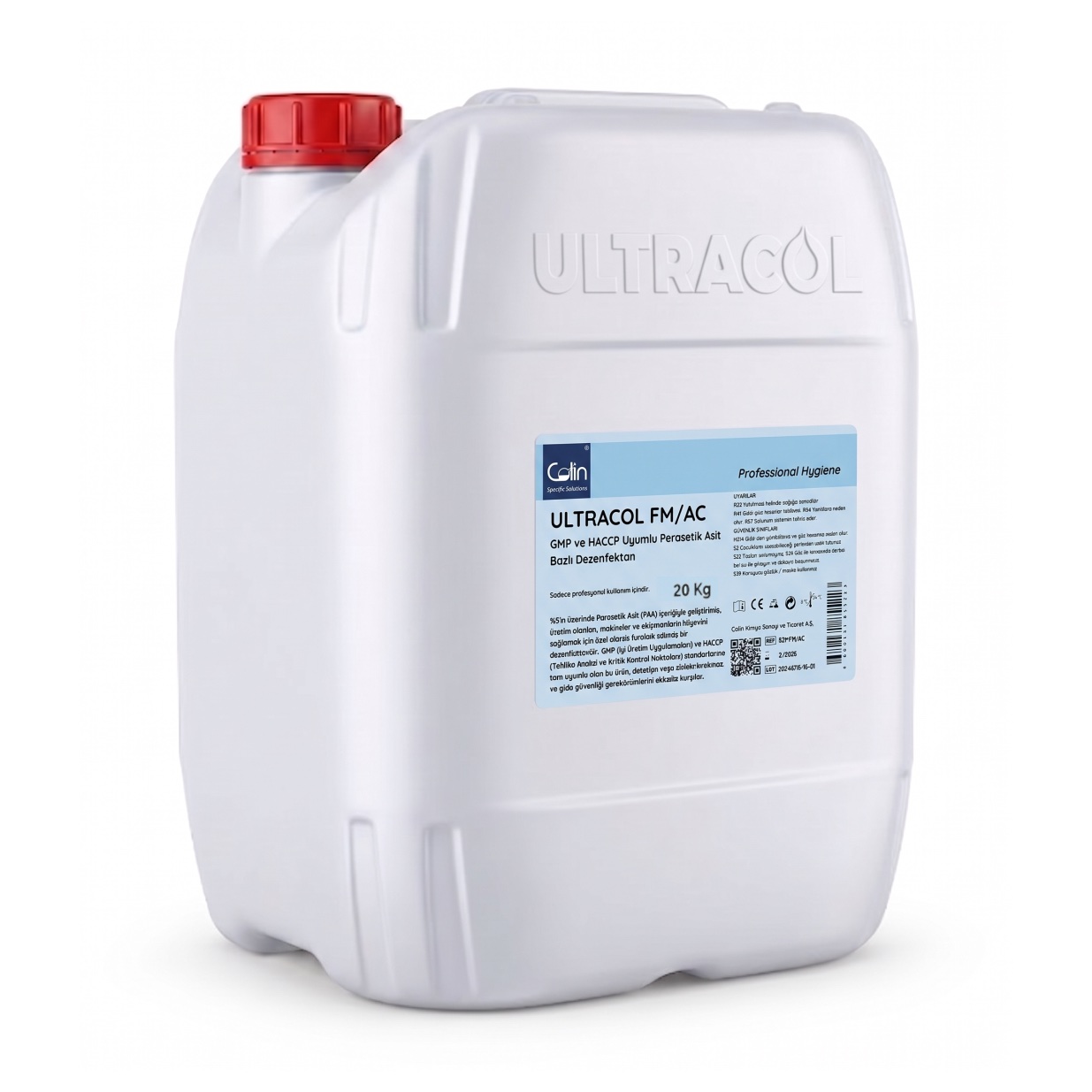
ULTRACOL FM/AC - GMP and HACCP Compliant Peracetic Acid Based ...
PAA-Based Cleaning Agent Foam CleaningULTRACOL FM/AC is a GMP and HACCP compliant, rapid and residue-free disinfectant containing.
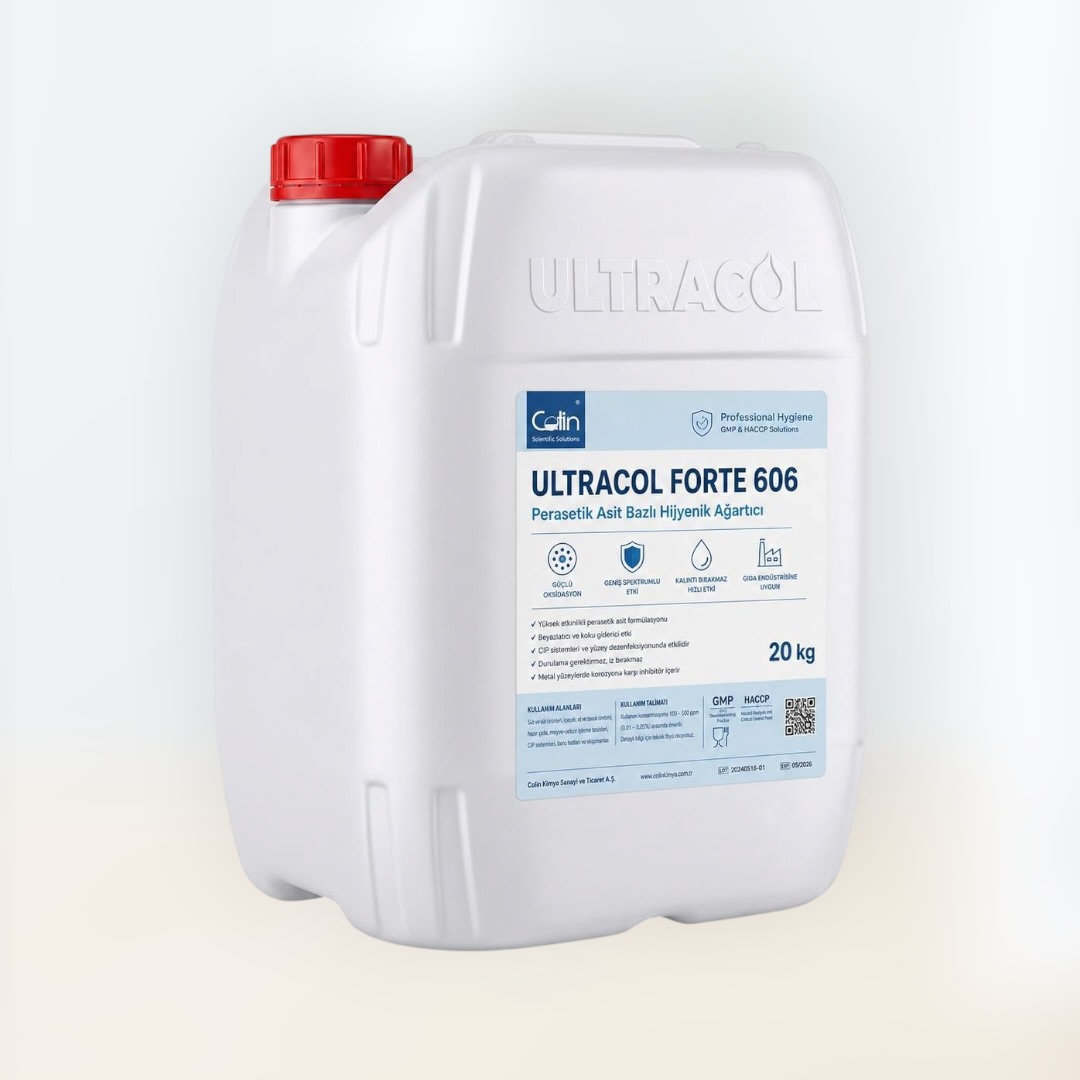
Forte 606 - Peracetic Acid-Based Hygienic Bleach
PAA-Based Hygienic Bleach Hygienic BleachingUltracol Forte 606 is a peracetic acid-based oxidative bleaching aid developed for industrial laundry and textile wash...

Peracetic Acid Test Kit
Active PAA Control Test / VerificationPeracetic Acid Test Kit measures peracetic acid content quickly and easily. Results in 5 minutes, no training required...
PAA Application Areas

Food and Beverage Process Hygiene
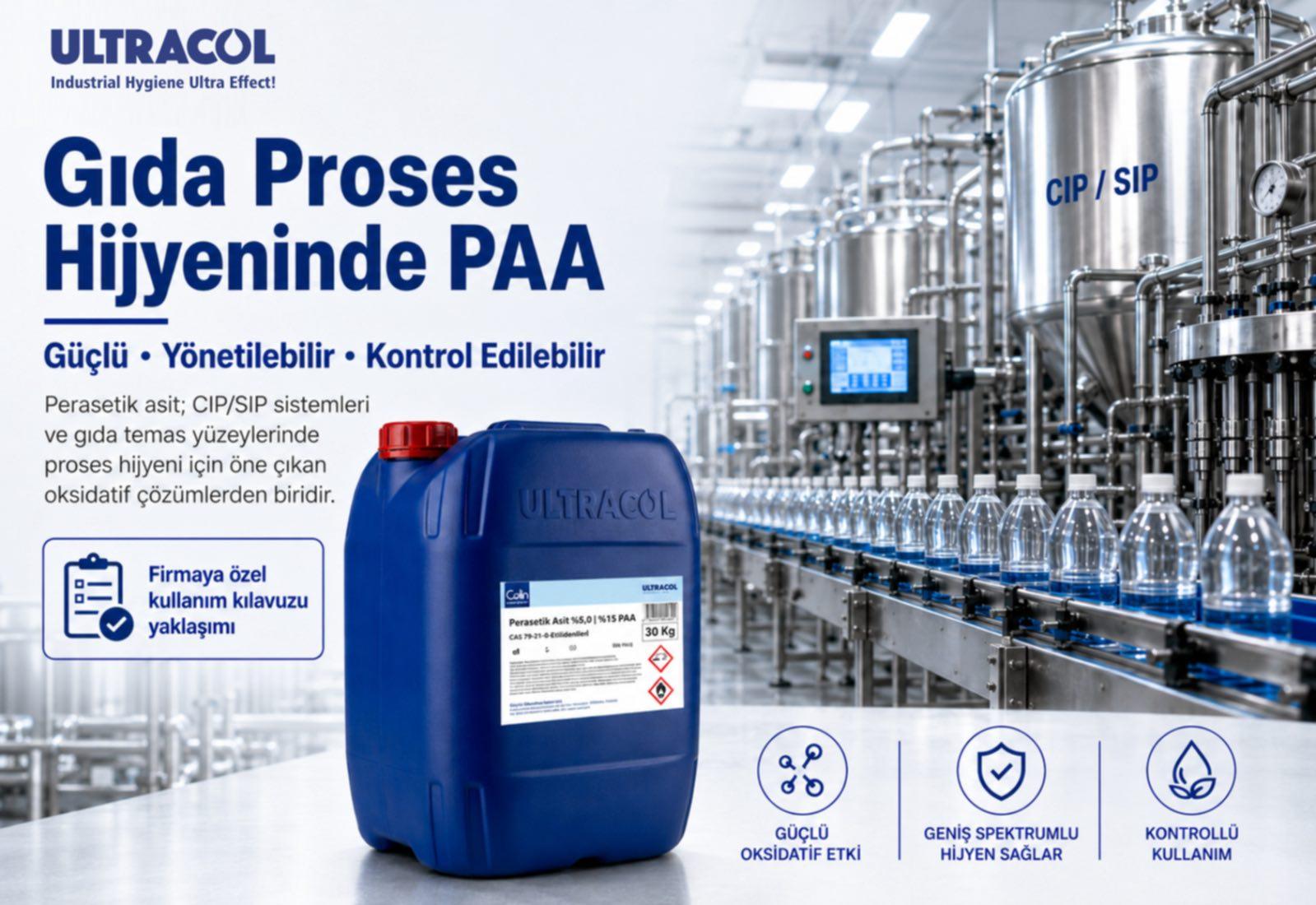
In food processing plants, PAA can be evaluated for hygiene applications on tanks, lines, filling equipment, external equipment surfaces and food contact surfaces.
PAA 5.0, PAA 10.0, PAA 15.0, PAA Test Kit
An application summary can be prepared according to food facility type, equipment, target ppm, contact time and residue control.

Industrial Water and Disinfection Applications
PAA can be evaluated as a chlorine-free oxidative alternative in process water, circulation water and selected industrial water disinfection applications.
PAA 5.0, PAA 10.0, PAA 15.0, PAA Test Kit
Technical evaluation can be made according to water volume, organic load, contact time and target active PAA level.

Wastewater and Environmental Control Applications
PAA applications in wastewater and environmental water management should be evaluated based on organic load, suspended solids, target microorganism and contact time.
PAA 5.0, PAA 10.0, PAA 15.0, PAA Test Kit
Field verification, active PAA measurement and discharge criteria should be considered.
Catering, Kitchen and Food Surface Hygiene
In catering and food surface hygiene, PAA should be evaluated together with surface cleaning, equipment hygiene and disinfectant residue control.
PAA 2000, PAA 2.0, PAA Test Kit
A short usage summary can be prepared according to surface type, rinsing procedure and usage frequency.

Equipment and Technical Surface Disinfection
PAA can be used on equipment and technical surfaces only after evaluating material compatibility, contact time and safety conditions.
PAA 2000, PAA 2.0, PAA 5.0, PAA Test Kit
Stainless steel, plastic, gasket and hose compatibility should also be evaluated.
After-Sales Application Support
Colin Kimya provides not only product supply for peracetic acid-based products, but also technical information supporting the correct and safe usage approach. For customers purchasing products, application-specific usage summaries can be prepared according to application area, process structure and intended use.
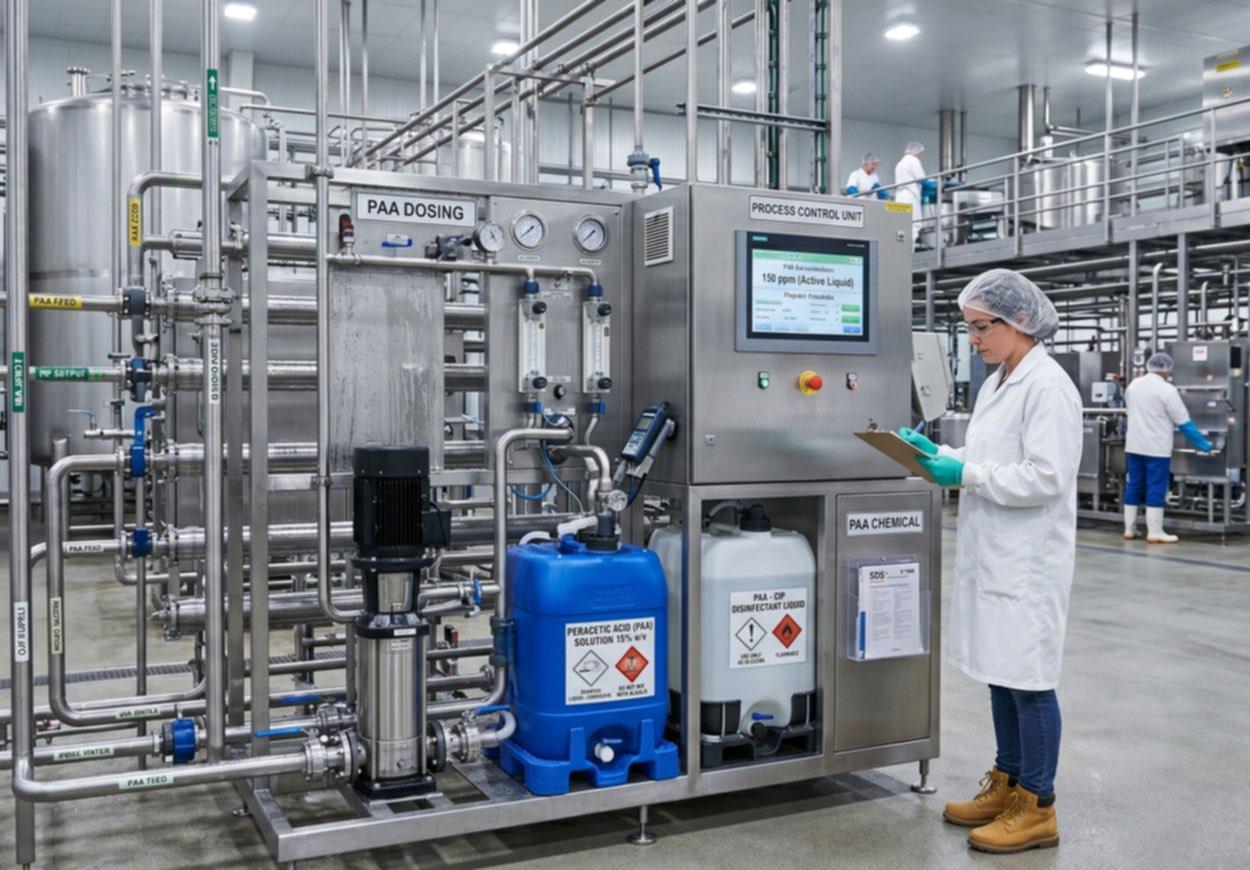
Product selection, dilution approach, target active PAA level, contact time, application frequency, test kit control and safe handling are evaluated together.
- PAA product selection suitable for the process
- Target ppm and dilution evaluation
- Contact time and application frequency approach
- Active ingredient control with PAA test kit
- Material compatibility and safe handling notes
Technical guidance should be evaluated together with the product technical data sheet, SDS and operating conditions.
PAA Calculator
Colin PAA Dilution Calculator helps calculate the approximate product amount required to reach the target active PAA level in peracetic acid-based products. Practical dilution results can be obtained by entering product concentration, target ppm and final volume.
The calculator is a supporting tool for pre-field planning, use solution preparation and test kit verification for PAA 2000, 2%, 5%, 10% and 15% peracetic acid products.
PAA Academy Articles and Application Guides



PAA User Guides and Document Summaries
User guides, technical documents and application summaries associated with the PAA product family are listed below.
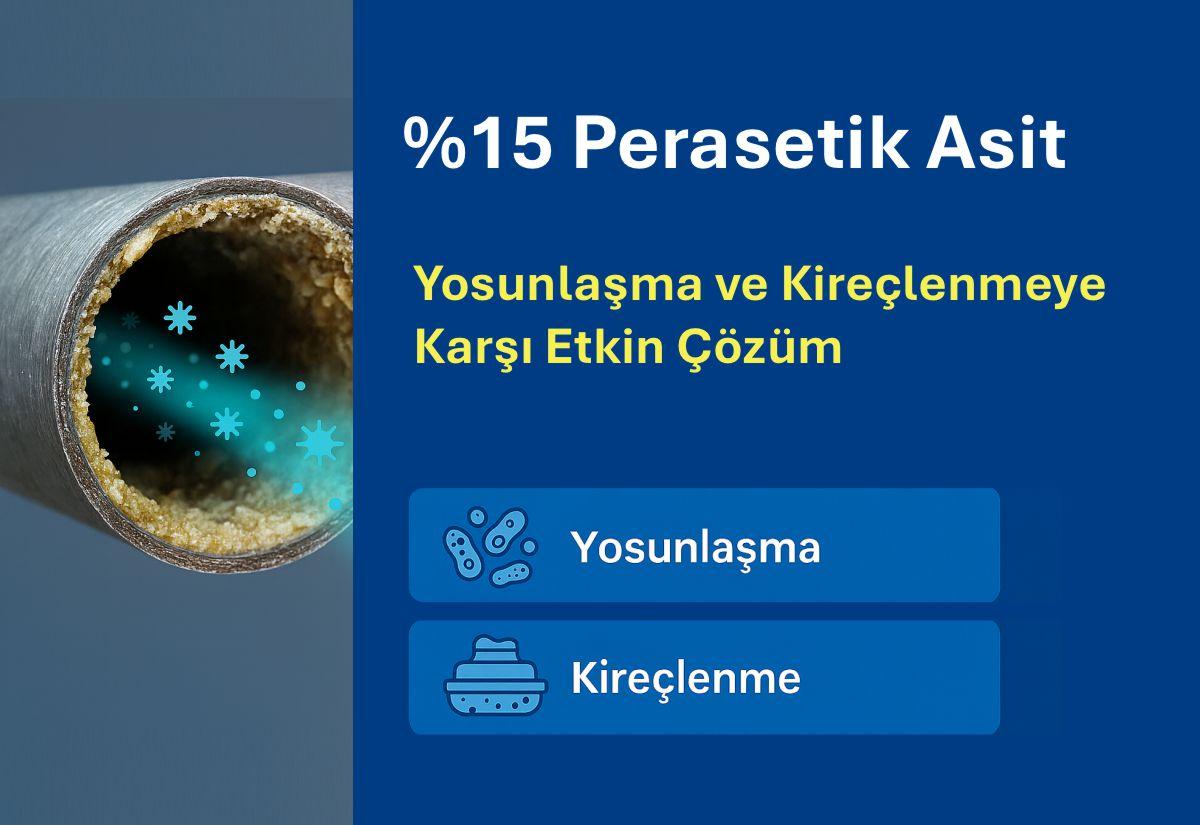
15% Peracetic Acid Use Guide for Trout Production Facilities
This preliminary technical use guide has been prepared for the controlled and efficient use of 15% peracetic acid-based products in trout production facilities, including low-dose controlled applications in ponds containing live fish, empty pond and tank disin...
Peracetic Acid 10% | %10 PAA | Peracetic Acid 15.0 | 15% PAA
Ultracol Forte 606 User Manual
Ultracol Forte 606 is a peracetic acid based oxidative bleaching aid for industrial laundry and textile washing processes. This manual explains dosage, application, rinsing, compatibility, storage and safe handling instructions.
Forte 606 - Peracetic Acid-Based Hygienic Bleach
Peracetic Acid Products: General Use and Application Guide for All Industries
Peracetic acid (PAA), thanks to its strong oxidative structure, rapid onset of action, and residue-free degradation profile, is one of the most preferred disinfection compounds in modern industrial hygiene applications. It has a wide range of uses, from food p...
Peracetic Acid 5.0 | 5% PAA | Peracetic Acid 10% | %10 PAA | Peracetic Acid 15.0 | 15% PAA
Disinfection Recommendations for Yeast Production Facilities: Hypochlorite & Peracetic Acid (PAA)
This technical study was prepared to compare the hypochlorite-based disinfection approach, commonly used in yeast production facilities, with the peracetic acid-based disinfection approach, and to explain how Peracetic Acid 15.0 containing 15% PAA can be evalu...
Peracetic Acid 10% | %10 PAA | Peracetic Acid 15.0 | 15% PAA
PAA Frequently Asked Questions
Approved customer questions and expert answers related to the PAA product family are listed below as summaries.
No approved question found for PAA products.
Once approved product questions are added for the PAA product family, they will be listed here automatically.
Ask a Technical QuestionRequest Technical Evaluation for Your PAA Application
Please fill out the form below for application-specific evaluation of peracetic acid-based products. Your request will be reviewed by our technical team.
Evaluation Process
PAA is a strong oxidizer. Application should not be performed without considering the product SDS, technical data sheet, label information and site validation.
